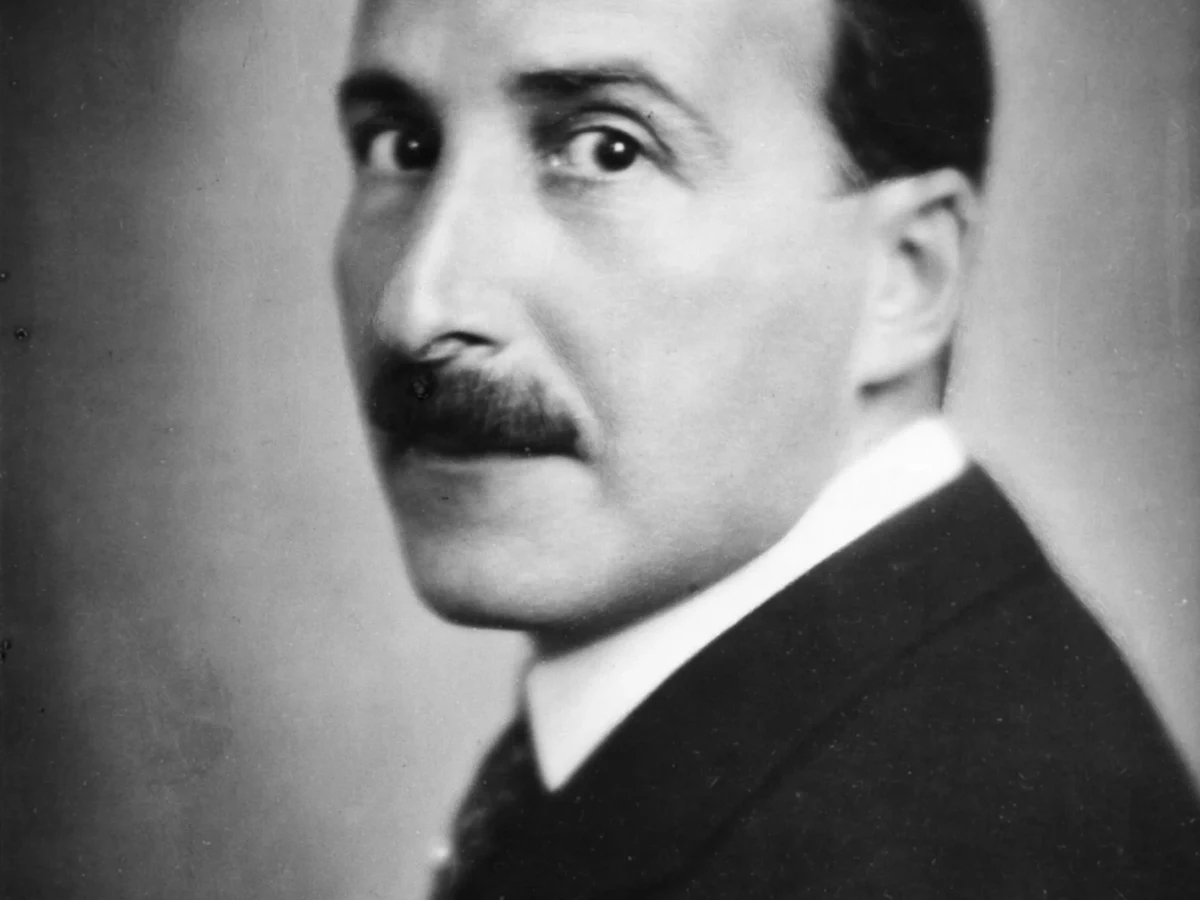
Biography
Stefan Zweig was born in Vienna in 1881, the son of a wealthy Jewish textile manufacturer, and received his doctorate from the University of Vienna in 1904 with a thesis on Hippolyte Taine. During the First World War he turned to pacifism and moved to Switzerland in 1917, where his tragedy “Jeremias” was staged at the Zurich Stadttheater. From 1919 to 1934 he lived in Salzburg and, with novella collections such as “Amok” (1922) and “Verwirrung der Gefühle” (Confusion, 1927), “Sternstunden der Menschheit” (Decisive Moments in History, 1927) and biographies such as “Marie Antoinette” (1932), became one of the most successful authors writing in German; on stage he had a success with his adaptation of Ben Jonson's “Volpone” (1926), and he wrote the libretto for Richard Strauss's opera “Die schweigsame Frau” (1935). His books were burned by the Nazis in 1933, and in 1934 he went into exile in London, became a British citizen in 1940 and in 1939 published “Ungeduld des Herzens” (Beware of Pity), the only novel to appear in his lifetime. By way of New York he reached Petrópolis in Brazil in 1941, where he wrote the “Schachnovelle” (The Royal Game); in February 1942 he and his wife Lotte took their own lives there, and his memoir “Die Welt von Gestern” (The World of Yesterday) was published later that year.
On Stagelog
Loading stats...